Football fans, welcome back to Hola Futbolera, the channel where football is lived with heart in hand and passion at its peak.
Today, we bring you a topic that has ignited massive debate — a real bombshell that has shaken the football world and has fans talking non-stop.
What are we talking about? None other than Lamine Yamal, the Barcelona prodigy, and his stellar performance in the Nations League semifinal against France, where Spain triumphed 5-4.
But hold on, because despite the 17-year-old star’s dazzling display, an authoritative voice has stepped in to put things in perspective: Lionel Messi himself.
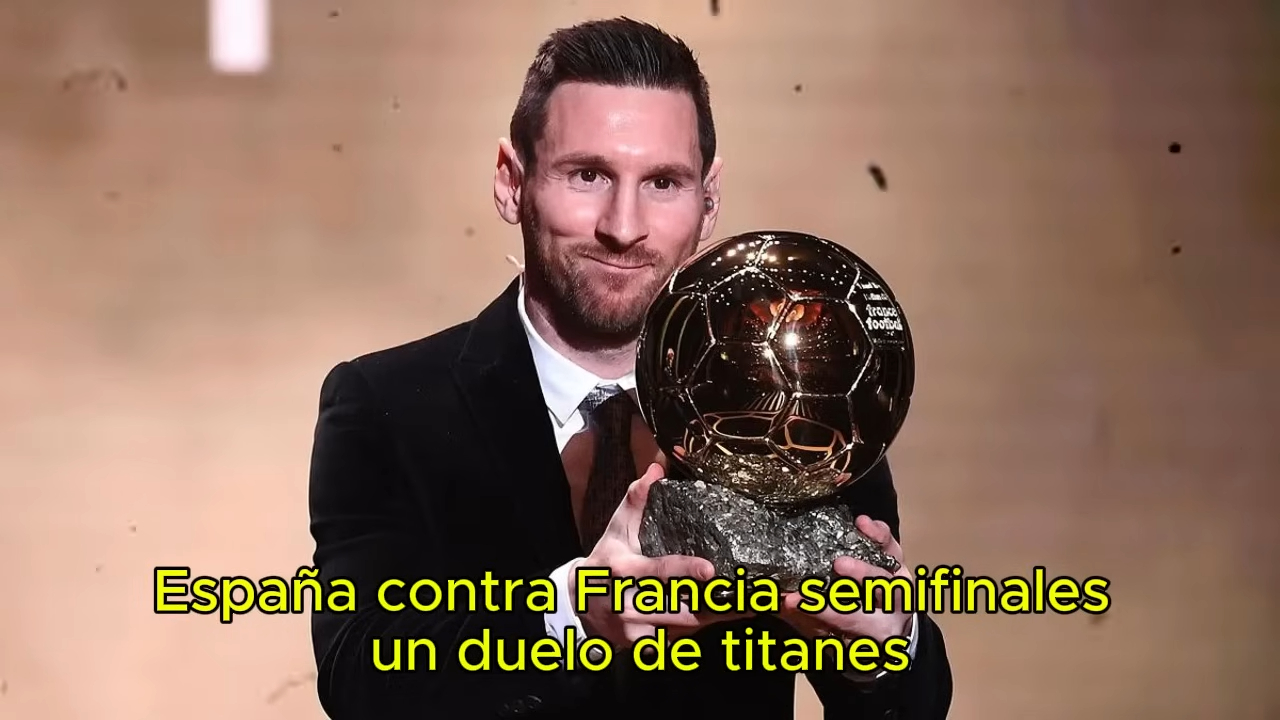
Yes, the living legend Leo has declared that despite Lamine’s magic, he doesn’t deserve the Ballon d’Or — and you’ll want to know why.
Buckle up, because this story is packed with arguments, controversy, and plenty of football.

Let’s set the scene.
We’re talking about an epic match — Nations League semifinal, Spain versus France.
The stadium was packed, tension was palpable, and Lamine Yamal, only 17, carried the team on his shoulders.
Two goals, one assist, and a showcase of dribbling skills that left defenders like Upamecano and Theo Hernandez dizzy.
This young talent from Mataró was a nightmare for France, and his stunning free-kick in the 87th minute sealed a 5-4 victory that had the world at his feet.
Social media exploded.
On X (formerly Twitter), fans shared clips with comments like “Lamine is the future of football” or “This kid is headed straight for the Ballon d’Or.”
Even international press outlets like L’Équipe and The Guardian lavished praise, calling him a star who could define an era.

But amid this fever over Lamine, Lionel Messi arrived with a bucket of cold water, igniting a storm.
In an exclusive interview with Argentine outlet TyC Sports after the match, the Inter Miami star was crystal clear: Lamine is phenomenal, incredibly talented — but the Ballon d’Or is a different matter.
“To win it, I had to do much more than what he has done this year,” said Leo.
Boom.
Those words hit like a bomb in the football world.
Because, let’s be honest, who better knows what it takes to win a Ballon d’Or than Messi himself, with eight trophies in his cabinet?
Why such a strong statement? Is it just a sincere opinion, or is there more behind it? Let’s break it down, because there are solid arguments — and a little spice.
First, Messi emphasizes experience.
According to him, winning the Ballon d’Or isn’t just about talent or a couple of brilliant matches; it’s about consistency over an entire season or multiple years.
“When I won my first Ballon d’Or in 2009, I’d been performing at an extremely high level for years, breaking records and winning major titles,” Leo explained.
And he’s right.
In 2009, Messi didn’t just shine with goals and assists; he led Pep Guardiola’s Barcelona to a historic treble — La Liga, Copa del Rey, and Champions League.
Lamine, although having a spectacular year, has yet to win a major collective trophy.
Barcelona is still fighting for the league title, and while favorites in the Champions League, the journey is far from over.
For Messi, the Ballon d’Or rewards those who combine individual brilliance with team success, and in that regard, Lamine still falls short.
Another point Messi raises is the competition.
This year’s Ballon d’Or race is more open than ever.
Players like Erling Haaland, smashing goal records with Manchester City, and Jude Bellingham, the engine behind Real Madrid’s march to another Champions League final, are in the conversation.
Even Rodri, with his versatility and clutch performances, has been mentioned as a candidate.
Messi notes these players have maintained top-level consistency throughout the season, while Lamine, despite his brilliance, has had moments of inconsistency.
For instance, in recent Clasicos against Real Madrid, Lamine had chances to make a difference but sometimes went unnoticed.
In league matches against teams like Getafe or Rayo Vallecano, he was less impactful.
According to Messi, the Ballon d’Or isn’t won with flashes of brilliance but with sustained excellence — something Lamine’s youth means he hasn’t yet achieved.
But it’s not all cold and calculated.
Some believe Messi’s words have a personal undertone.
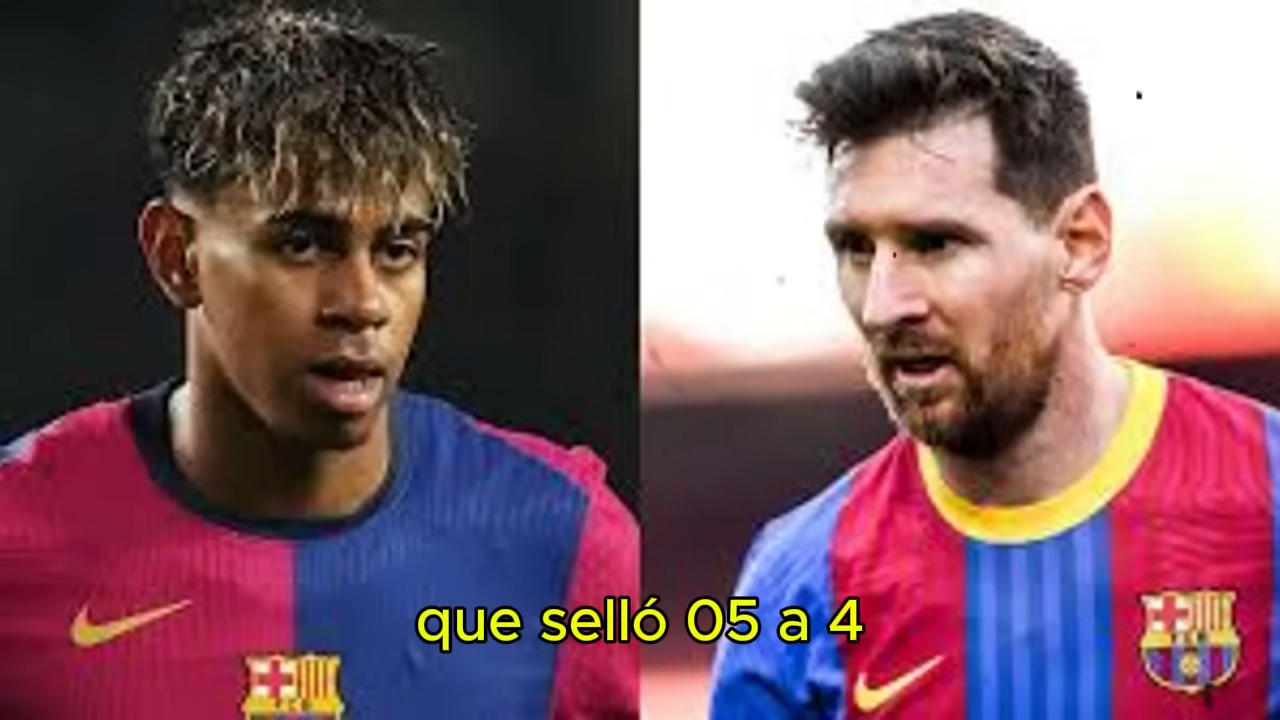
Lamine is, in many ways, Messi’s natural heir at Barcelona.
Both are products of La Masia, both right-wingers with extraordinary talent, and both debuted with the first team as teenagers.
Since Lamine burst onto the scene, comparisons to Messi have been inevitable.
While Leo has always spoken affectionately about the young star, some think these statements are a way of marking territory.
Messi knows Lamine could become the next great football idol and doesn’t want fame to get to his head too soon, a journalist on X commented.
It’s as if Leo, with his experience, wants to remind Lamine that the road to the Ballon d’Or is long and filled with obstacles.
The media pressure on Lamine is another factor Messi highlights.
Since debuting at 15, every goal, every dribble, every game has been scrutinized.
Though the kid has shown impressive maturity, Messi believes crowning him a Ballon d’Or candidate so early could be harmful.
“When I was 17, no one put that pressure on me.
They let me grow, make mistakes, and learn.
Lamine needs the same,” said the Argentine.
And he’s not wrong.
In 2005, when Messi was Lamine’s age, he was just starting to shine at Barcelona but was not yet considered a Ballon d’Or contender.
It was four years later, at 22, when he won his first award.
Messi thinks Lamine has all the time in the world to reach that level, but putting him on a pedestal now risks burning him out prematurely.
Another debated point is Lamine’s collective impact compared to other candidates.
While he’s been key for Barcelona and Spain, he hasn’t had the same weight as Messi once did or as Haaland has now at City.
In his TyC Sports interview, Leo explained, “The Ballon d’Or isn’t just for the best player, but for the one who changes the course of their team, who leads them to win everything.
” Lamine is on that path but isn’t yet the leader.
This is backed by stats: in decisive matches like the Champions League last-16 against PSG or the league Clasico, Lamine was a decisive factor.
But players like Bellingham, who scored a last-minute goal against Barça, or Haaland, who smashed 35 Premier League goals, have had moments that defined championships.
For Messi, that’s the difference.
Not everyone agrees with Messi.
On social media, especially on X, Barça fans have rushed to defend Lamine.
“Messi is a legend, but he’s being unfair.
Lamine is doing things he didn’t at 17,” wrote one user.
Others suggest Messi’s words might be a way to deflect attention from his own season, which, although good with Inter Miami, hasn’t met his usual standards.
In MLS, Messi scored 15 goals and provided 12 assists, but Miami failed to qualify for playoffs, drawing criticism.
Some believe Leo, aware he’s not in the Ballon d’Or race, wants to slow Lamine’s rise to avoid direct comparison.
Let’s pause to discuss Lamine’s performance against France, which deserves a chapter of its own.
That match was madness.
Spain started down 2-0 within 15 minutes, with goals from Kylian Mbappé and Antoine Griezmann.
But Lamine, with composure beyond his years, took charge.
At 25 minutes, he received a pass on the right wing, curled a left-footed shot into the top corner, and the stadium erupted.
In the second half, he won and converted a penalty to make it 3-2.
When it looked like extra time was inevitable, Lamine conjured a masterpiece — a free kick in the 87th minute, perfectly placed in the upper right corner, unreachable for the French keeper.
The winning goal that sent Spain to the Nations League final.
After the match, Luis de la Fuente praised him: “Lamine is a unique player, not just for his talent but for how he handles pressure.
He’s a born leader.
” Yet, for Messi, even this stellar performance isn’t enough for the Ballon d’Or.

Critics also point to Lamine’s age as a drawback.
Paradoxically, being so young can be a handicap.
The Ballon d’Or usually rewards players who have reached footballing maturity and proven themselves over multiple seasons.
Lamine has only a season and a half as a professional.
His numbers are impressive but he lacks the experience of other candidates.
When Messi won his first Ballon d’Or, he had played over 150 games and won six titles.
Lamine barely exceeds 60 games and hasn’t lifted a major trophy yet.
For Ballon d’Or voters — journalists worldwide — this could be decisive.
But what if Messi is wrong? Let’s look at Lamine’s side.
This kid is not only breaking age-related records but changing Barcelona’s dynamic.
Under Flick, the team has rediscovered joy and attacking football, with Lamine at its heart.
His ability to dribble, assist, and score makes him unique, and his impact goes beyond stats.
In streets, bars, and online, Lamine’s name is everywhere.
Kids want his jersey; adults see him as Barça’s savior.
In the national team, his chemistry with players like Nico Williams and Gavi is creating a golden generation that might dominate world football for years.
Doesn’t that deserve a Ballon d’Or?
Context matters too.
The 2009 Barça team had Xavi, Iniesta, Puyol, Busquets — a constellation of stars.
Today’s Barça is rebuilding, with financial troubles and a young squad still learning to compete.
For Lamine to shine in such a context says a lot about his talent.
Against a France filled with stars like Mbappé, Dembélé, and Coman, Lamine didn’t shrink — he was man of the match.
How many 17-year-olds can say that? Perhaps Messi, trying to protect Lamine, is being too harsh.
There’s also Lamine’s cultural impact.
Beyond goals and assists, he inspires a generation.
Born in a humble neighborhood of Mataró, of Moroccan and Ecuadorian descent, Lamine embodies diversity and the dream of rising from the bottom.
His story connects with millions worldwide, and that’s something the Ballon d’Or should value too.
Messi also came from humble beginnings and knows what it means to be a symbol.
Maybe he’s not fully seeing the off-field impact Lamine already has.
At its core, this debate isn’t just about Lamine or the Ballon d’Or — it’s about Messi’s legacy.
Leo knows his time at the top is ending, and while still extraordinary, the spotlight is shifting to new generations.
Lamine, with his boldness, talent, and humility, seems the perfect heir.
But Messi’s words seem to say, “Not yet.”
And maybe he’s right.
The Ballon d’Or is football’s most prestigious award, requiring more than a brilliant year — it demands a legacy, a narrative, a story.
Lamine will surely build that in time.
So, who’s right? Messi, with his experience and football wisdom, or those who defend that Lamine already deserves the Ballon d’Or? Truth, as always, lies in the gray area.
Lamine Yamal is a generational talent doing things few have done at his age.
But the Ballon d’Or, as Messi says, rewards sustained excellence, leadership, and collective impact.
Lamine is on that path but has a journey ahead.
One thing is clear: this debate has only just begun, and Lamine Yamal’s name will continue to stir conversation for years to come.
