
In 1986, a young Tracy Chapman sat on a couch in her modest apartment, her dog curled up close beside her. Outside the window, Cleveland carried on like it always had—blue-collar grit, quiet struggle, and the weight of ordinary people doing their best to get by. Tracy picked up her guitar, strummed a few chords, and began weaving words together.
She wasn’t thinking about fame. She wasn’t chasing awards. She was trying to put into song the ache she saw and felt all around her—the longing for escape, the fragile hope of a better life, the way dreams always seemed just one car ride away.
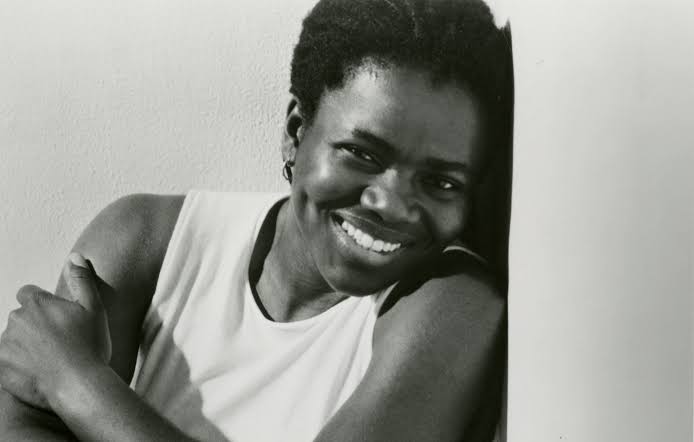
And as she played, her dog’s ears twitched. The pup perked up every time she repeated the refrain. Tracy smiled. Maybe she was onto something.
That song became Fast Car.
Back then, there was no record deal. No spotlight. Just a young woman with a guitar, pouring her soul into small gigs at a coffee house near Tufts University in Boston. The crowd was usually small—students, locals, strangers passing through. But every time, Tracy sang with the same conviction, the same quiet fire.
One night, among the coffee cups and chatter, a Tufts student named Brian Koppelman happened to be there. He listened closely, and when Tracy finished, he felt something stir deep inside. Her voice, her words—they weren’t ordinary. They carried truth.
After the set, he approached her nervously.
“I don’t normally do this,” he admitted, “but I think my father could help you.”
It was a bold statement. But Brian’s father wasn’t just anyone. Charles Koppelman co-owned one of the largest music publishing houses in the world. And two years later, thanks to that chance encounter, Tracy Chapman released her debut album.

The song her dog had loved—Fast Car—soon belonged to the world.
It was an anthem for the working class, a confession of longing, a cry of hope and heartbreak all in one. It climbed the charts, sold millions, and cemented Tracy as one of the most authentic voices of her generation.
And then, life carried on. The years passed. New artists came, new songs filled the airwaves. Yet Fast Car never disappeared. It lived on in radio playlists, on road trips, in the memories of people who heard their own lives echoed in its lyrics.
And then came tonight.
Thirty-five years after its release, Tracy Chapman’s Fast Car won both Single of the Year and Song of the Year at the CMA Awards. A song written on a couch in 1986, with a dog listening nearby, now reaching new audiences and reminding the world of its timeless power.
Pretty cool? More than that. It’s proof that truth in art never fades. That a song born in quiet honesty can outlast decades, cross genres, and touch hearts long after the first chord is strummed.
