The ocean has a way of surprising those who love it most. For surfers, it usually means an unexpected swell, a perfect wave, or a sudden storm. But for a group of surfers in Costa Rica earlier this week, the ocean offered something entirely different: a cry for help.

On what began as an ordinary Wednesday morning, Mauricio Camareno and his friends grabbed their boards and headed to the beach, eager to spend hours riding the waves. The air was calm, the tide low, and the group was looking forward to the rhythm and joy that surfing always brought them. But before they even reached the surf, their plans changed.
Near the mouth of a small river, they noticed something unusual—a dark, shapeless form in the shallow water. At first, it looked like driftwood or a rock, stranded by the low tide. But as they drew closer, the truth revealed itself in a sound none of them would forget: the piercing, desperate cries of a baby whale.
The calf, a young pilot whale, was struggling just to stay afloat. She thrashed weakly, her breaths labored, her body exhausted. Without intervention, she was on the brink of drowning.
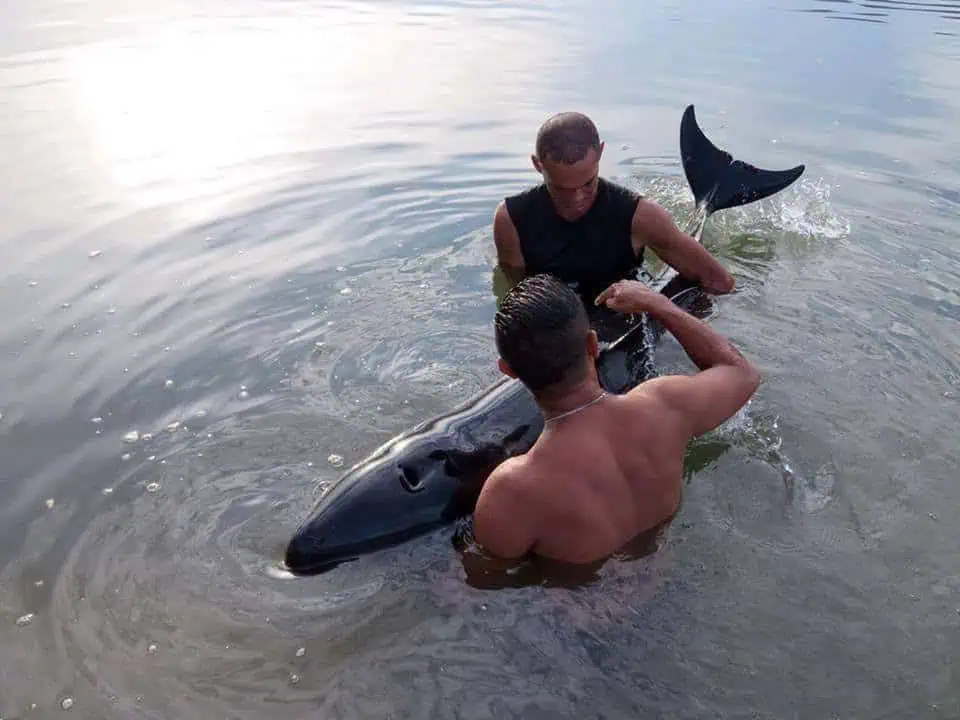
For the surfers, there was no hesitation. Boards were dropped, plans forgotten. A new mission began—not to catch waves, but to save a life.
Mauricio later explained, “She was weak and could not keep afloat.” The sight was heartbreaking. In that moment, the ocean-loving group became rescuers, bound together by instinct and compassion.
They surrounded the calf gently, careful not to cause more distress. With strength and coordination, they lifted her fragile body and guided her into deeper water, away from the shallows that had trapped her. But the rescue wasn’t simple. The calf was so exhausted that she couldn’t hold herself up to breathe. Every few minutes, one of the surfers had to support her, steadying her body and lifting her slightly so she could draw air into her lungs.
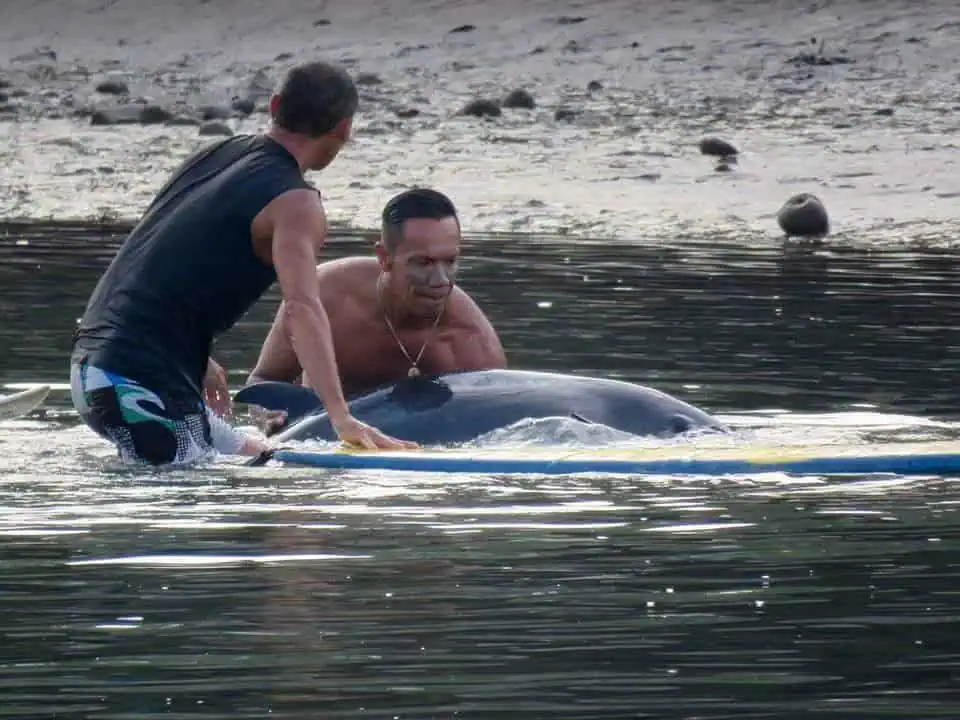
Minutes stretched into hours. The sun rose higher in the sky, beating down on both whale and rescuers. Saltwater stung their eyes, their muscles ached, but no one left. They worked in shifts, staying close to the calf, whispering encouragement as if their voices alone could keep her alive.
Six hours passed.
Six hours of holding, steadying, guiding—of refusing to give up even as fatigue set in. The surfers could have walked away, left the calf to her fate. Instead, they chose perseverance, embodying the truest form of compassion: commitment without expectation of reward.
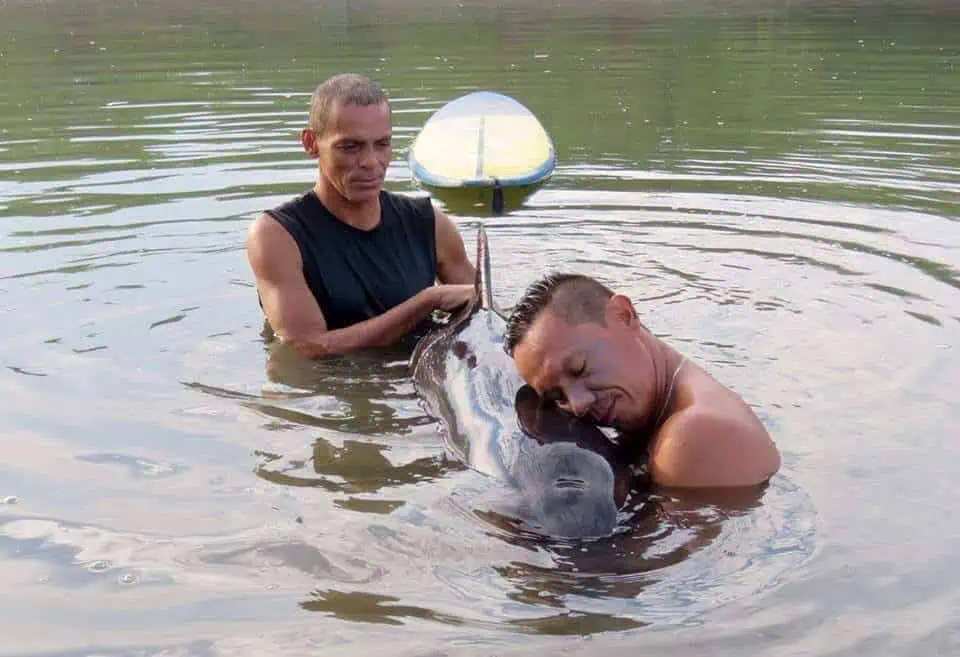
Finally, the tide began to rise. The water deepened, giving the calf a fighting chance. Slowly, carefully, the surfers guided her farther out, toward the open sea. With each push, she seemed a little stronger, her movements a little steadier. Then came the moment they had all been waiting for—she began to swim on her own.
The group watched, hearts pounding, as the baby whale moved into deeper waters, each stroke of her fins carrying her farther from danger. When she finally disappeared into the horizon, swallowed by the vastness of the ocean, the surfers stood in silence, drenched in salt and sweat, overcome by relief.
Their surfing session never happened that day. But something far greater did.
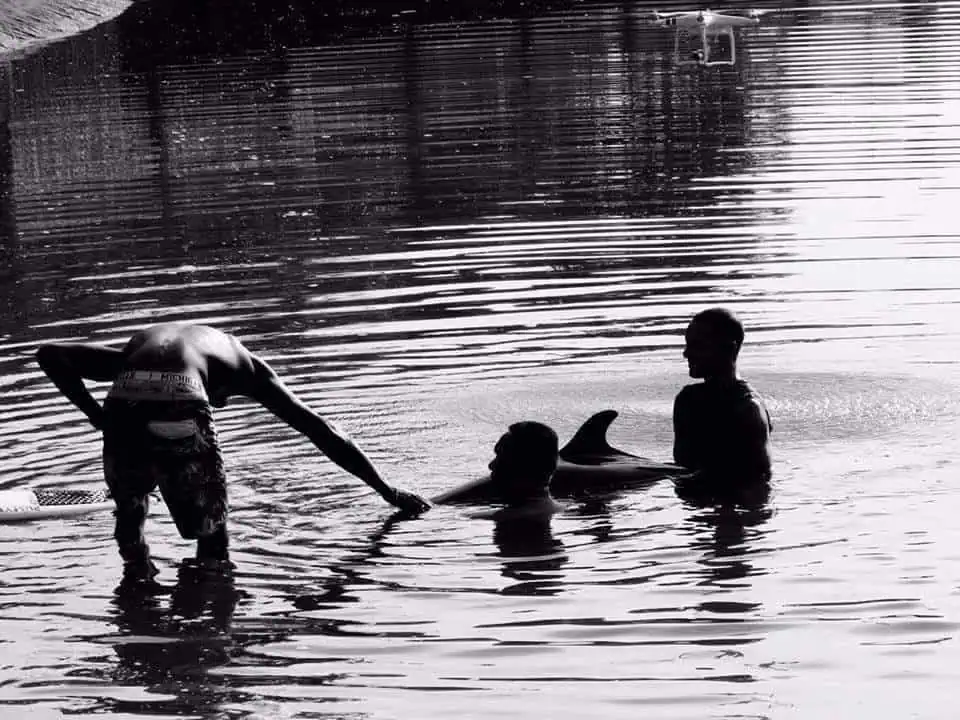
In those hours, the surfers became part of something larger than themselves—a reminder that humans are at their best when they choose empathy over indifference, action over convenience. Their selfless decision to spend six hours saving a stranded whale calf has now inspired countless people around the world, thanks to the video that captured their efforts.
It’s easy to forget how fragile the line between life and death can be for the creatures we share this planet with. Deforestation, pollution, climate change, and human activity constantly threaten the balance of nature. And yet, in moments like this, humanity shows its other side—the side that protects, nurtures, and refuses to look away.
The surfers of Costa Rica didn’t just rescue a whale that day. They reminded us all of the power of compassion, the strength of teamwork, and the responsibility we share to care for the world beyond ourselves.
Because sometimes, the most important waves are not the ones you ride, but the ones you create—the ripples of kindness, courage, and hope that carry far beyond the shore.
